
 English
 Español
 Portugues
 Pусский
 Français
 العربية
 ไทย
ไทย Türk dili
 Indonesia


Aluminum Overhead Line
Tìm {từ khóa} Bán buôn & trích dẫn từ Trung Quốc. Chúng tôi là nhà sản xuất chuyên nghiệp của {keyword} công ty, nhà máy và nhà xuất khẩu chuyên về {từ khóa} với chất lượng cao.
Sản phẩm
Danh mục:
-
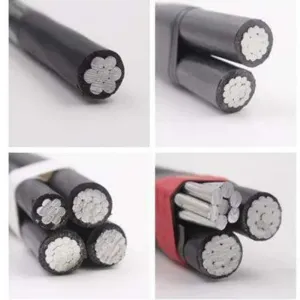
ABC Cable 4 Core 10mm² 16mm² 25mm² - XLPE Insulated, Aluminum Overhead Cable, Low Voltage Power Line
Phân loại của họ: Dây điện cách nhiệt trên caoLượt xem: 362Số:Thời gian phát hành: 2025-09-03 07:36:14The ABC (Aerial Bundled Cable) series—featuring 4-core configurations of 10mm², 16mm², and 25mm² aluminum conductors, XLPE (cross-linked polyethylene) insulation, and designed for low-voltage power lines—emerges as a versatile, durable solution for overhead power distribution across residential, commercial, and light utility sectors. Unlike generic low-voltage cables, this series balances scalable current-carrying capacity, weather resilience, and ease of aerial installation, making it a preferred choice for municipal utilities, electrical contractors, and infrastructure developers tackling projects with varying load demands. By examining its core design, conductor sizing versatility, material advantages, and real-world application value, this summary highlights why it has become a staple in modern low-voltage overhead power networks. At the heart of this cable series is its diverse 4-core aluminum conductor sizing (10mm², 16mm², 25mm²), each calibrated to address specific low-voltage load requirements. The 4-core configuration (3 phase conductors + 1 neutral conductor) aligns with global three-phase four-wire (3P+N) low-voltage systems, ensuring balanced power distribution that minimizes voltage fluctuations—critical for protecting sensitive equipment like residential smart appliances, commercial lighting, or small industrial tools. Each conductor size delivers a distinct ampacity (current-carrying capacity) tailored to its intended use, with performance adjusted for ambient temperature: The 10mm² variant offers an ampacity of 45–55 amps at 30°C, ideal for powering small residential clusters (5–8 homes) or low-load utility applications like park lighting or rural farm outbuildings. Its compact size (outer diameter of ~15mm when bundled) makes it suitable for dense urban areas where utility poles have limited space for multiple cables. For example, a small suburban neighborhood in Oregon uses 10mm² cables to power 6 single-family homes, leveraging its lightweight design to minimize pole load and installation labor. The 16mm² variant boosts ampacity to 65–75 amps at 30°C, catering to medium-sized residential complexes (10–15 homes) or small commercial spaces like convenience stores or office suites (500–1,000 square feet). It balances power delivery with practicality, supporting total loads of 15–20 kW—sufficient for running HVAC systems, point-of-sale equipment, and lighting in a 800-square-foot retail store. A strip mall in Texas relies on 16mm² cables to supply power to 4 small businesses, with its XLPE insulation resisting the region’s high summer temperatures (up to 40°C) without degradation. The 25mm² variant provides 90–100 amps at 30°C, the largest size in the series, designed for high-load scenarios like large residential developments (20–25 homes), commercial warehouses (1,000–2,000 square feet), or light industrial workshops with small machinery (e.g., woodworking shops, textile studios). It supports total loads of 25–30 kW, eliminating the need for higher-gauge cables in most low-voltage overhead applications. A residential subdivision in Florida uses 25mm² cables to power 22 homes with electric vehicle chargers and energy-efficient HVAC systems, leveraging the conductor’s high ampacity to handle peak evening loads. This sizing scalability eliminates the need for multiple cable types across a single project, simplifying inventory management and reducing installation complexity—particularly valuable for contractors working on mixed-use developments that combine small homes, retail spaces, and utility infrastructure. The aluminum conductor material is a strategic choice for overhead use, offering a superior balance of performance, cost, and practicality. Aluminum is 30% lighter than copper conductors of the same cross-sectional area, reducing the mechanical load on utility poles and support structures. For example, a 100-meter length of 25mm² aluminum cable weighs approximately 28 kg, compared to 78 kg for a copper equivalent—making it easier for two-person crews to handle and install without specialized heavy-lifting equipment. This lighter weight also extends the lifespan of utility poles by minimizing long-term stress, lowering maintenance costs for utilities by 20–30% over the cable’s service life. Aluminum is also 40–50% more cost-effective than copper, a critical advantage for large-scale projects (e.g., new residential subdivisions or rural electrification initiatives) where material costs can account for 30–40% of the total budget. Modern aluminum conductors in this series address historical concerns about corrosion through a zinc or aluminum oxide anti-corrosion coating. This coating forms a dense, protective barrier against moisture, salt spray (in coastal areas), and urban pollutants (e.g., exhaust fumes, dust). In accelerated corrosion tests (per ASTM B117, 1,000 hours of salt spray exposure), the conductors retain 90% of their original electrical conductivity—matching the longevity of copper conductors (25–30 years) while keeping upfront costs low. The conductors are also stranded (7–19 strands, depending on size) to enhance flexibility: 10mm² conductors use 7 strands of 1.3mm diameter wire, 16mm² use 19 strands of 1.0mm wire, and 25mm² use 19 strands of 1.3mm wire. This stranding allows the cable to bend around utility poles and navigate tight corners during installation without cracking, a key advantage over rigid solid conductors. The XLPE (cross-linked polyethylene) insulation further elevates the cable’s durability and reliability, making it suitable for the harsh outdoor conditions of overhead installation. Unlike traditional PVC insulation, XLPE undergoes a cross-linking process (via chemical, radiation, or silane methods) that transforms its linear polymer structure into a three-dimensional network, delivering exceptional properties: Thermal Stability: XLPE operates reliably across a temperature range of -40°C to 90°C, far wider than PVC’s 0°C to 70°C. This allows the cable to perform in extreme climates—from freezing winter nights in northern Canada (-30°C) to hot, arid summers in Arizona (45°C)—without insulation brittleness or softening. Even at 90°C (maximum continuous operating temperature), its dielectric strength remains ≥20 kV/mm, ensuring no electrical breakdown under low-voltage stress. Environmental Resistance: XLPE is highly resistant to water absorption (≤0.1% after 24 hours of immersion), preventing moisture-induced short circuits during rainstorms or snowmelt. It also resists UV radiation (maintaining 90% tensile strength after 2,000 hours of UV exposure per ISO 4892-3) and industrial pollutants (e.g., oil, dust, bird droppings). This resistance eliminates the need for frequent insulation repairs or replacements, even in exposed aerial installations—reducing maintenance costs by 25–35% compared to PVC-insulated cables. Electrical Performance: With a low dielectric loss tangent (tan δ < 0.001 at 50Hz), XLPE minimizes energy loss during transmission—critical for long-distance overhead runs (up to 1km). For example, a 500-meter span of 16mm² cable loses only 1–2% of power, compared to 3–4% for PVC-insulated cables, helping utilities meet sustainability goals by reducing transmission inefficiencies. The insulation thickness is calibrated to each conductor size to meet low-voltage requirements (typically 0.6/1kV): 0.8mm for 10mm², 1.0mm for 16mm², and 1.2mm for 25mm². This thickness balance ensures electrical safety while keeping the cable’s outer diameter compact (15–22mm), critical for fitting multiple cables on utility poles in dense urban or suburban areas. The aerial bundled (ABC) design is tailored to the logistical challenges of overhead installation. By integrating all 4 cores into a single bundled unit, the cable reduces clutter on utility poles and minimizes the risk of damage from vegetation (e.g., tree branches), wildlife (e.g., squirrels, birds), or accidental contact with construction equipment. The cores are twisted in a helical pattern with a pitch of 15–20 times the cable’s outer diameter (225–440mm), which improves aerodynamic efficiency—reducing wind resistance and ice loading in storm-prone areas. This design also simplifies installation by eliminating the need to string separate phase and neutral conductors, cutting installation time by 30–40% compared to traditional overhead cables. Many variants include an optional galvanized steel messenger wire (8mm²–12mm²) integrated into the bundle to provide additional mechanical support. The messenger, with a tensile strength of 1.2–1.8 kN, enables spans of up to 50 meters between utility poles—ideal for rural areas where pole spacing is wider. For example, a rural electrification project in Nebraska uses 10mm² cables with 8mm² messengers to span 45 meters between poles, reducing the number of poles needed by 20% and lowering infrastructure costs. The messenger is bonded to the core bundle via extrusion, forming a unified structure that distributes tension evenly, preventing excessive sag and conductor fatigue. In terms of applications, this cable series excels across diverse low-voltage sectors: Residential Infrastructure: The 10mm² and 16mm² variants are widely used in suburban and rural neighborhoods. A 15-home subdivision in Minnesota uses 10mm² cables to power small homes with basic electrical needs (lighting, appliances), while a 20-home development in California deploys 16mm² cables to support energy-efficient homes with solar panels and electric vehicle chargers. The XLPE insulation’s cold resistance ensures reliable performance during Minnesota’s harsh winters, while its UV resistance protects against California’s intense sunlight. Commercial and Retail Spaces: The 16mm² and 25mm² variants serve small commercial buildings, strip malls, and office parks. A 1,200-square-foot office building in Illinois uses 16mm² cables to power 10 workstations, HVAC systems, and conference room equipment, while a 2,000-square-foot warehouse in Georgia relies on 25mm² cables to run conveyor belts and packaging machinery. The ABC design’s compact profile fits easily on utility poles outside commercial properties, avoiding unsightly clutter and reducing the risk of damage from delivery trucks or pedestrians. Utility and Public Infrastructure: The 10mm² and 16mm² variants are used for public lighting, park infrastructure, and rural farm applications. A city park in Colorado uses 10mm² cables to power 12 LED park lights, with spans of 30 meters between poles, while a rural farm in Iowa deploys 16mm² cables to supply power to a barn and irrigation pumps. The cable’s corrosion resistance protects against farm chemicals and animal waste, ensuring long-term reliability in agricultural environments. Light Industrial Zones: The 25mm² variant caters to small industrial workshops with low-to-moderate power demands. A woodworking shop in Ohio uses 25mm² cables to power table saws, sanders, and dust collection systems, with the cable’s high ampacity handling intermittent heavy loads. The XLPE insulation’s resistance to sawdust and oil prevents insulation degradation, reducing the risk of electrical fires in industrial settings. In summary, the ABC Cable 4 Core 10mm² 16mm² 25mm²—with XLPE insulation and aluminum conductors—delivers a winning combination of versatility, durability, and cost-effectiveness for low-voltage overhead power lines. Its scalable conductor sizing, lightweight aluminum material, weather-resistant XLPE insulation, and efficient ABC design make it a reliable choice for residential, commercial, utility, and light industrial projects. Whether powering a small neighborhood, a strip mall, or a rural farm, this cable series meets the diverse needs of modern low-voltage infrastructure while minimizing installation and maintenance costs.
Tin tức
Danh mục:
Không có kết quả tìm kiếm!
Trường hợp
Danh mục:
Không có kết quả tìm kiếm!
Video
Danh mục:
Không có kết quả tìm kiếm!
Tải về
Danh mục:
Không có kết quả tìm kiếm!
Tuyển dụng
Danh mục:
Không có kết quả tìm kiếm!
Sản phẩm được đề xuất
Không có kết quả tìm kiếm!



 Điện thoại
 Thư
Thư