
 English
 Español
 Portugues
 Pусский
 Français
 العربية
 ไทย
ไทย Türk dili
 Indonesia


AAAC Conductor
Tìm {từ khóa} Bán buôn & trích dẫn từ Trung Quốc. Chúng tôi là nhà sản xuất chuyên nghiệp của {keyword} công ty, nhà máy và nhà xuất khẩu chuyên về {từ khóa} với chất lượng cao.
Sản phẩm
Danh mục:
-
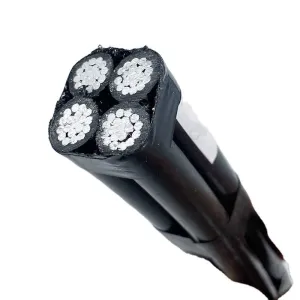
ABC Aerial Bundled Cable 0.6/1kv - 3X95mm² + 1X50mm² , AAAC Conductor, XLPE Insulated
Phân loại của họ: Dây điện cách nhiệt trên caoLượt xem: 292Số:Thời gian phát hành: 2025-09-02 06:30:54The ABC Aerial Bundled Cable 0.6/1kV - 3×95mm² + 1×50mm² with AAAC conductor and XLPE insulation is an efficient equipment specially designed for medium and large-capacity power transmission in the medium and low-voltage power distribution field. Relying on the core advantages of "high-strength conductor, high-quality insulation, and optimized core number configuration", it is widely used in urban distribution network trunk lines, industrial park power distribution, large residential community power supply, and suburban power grid interconnection. It has become the preferred solution to replace traditional multiple single-core cables and bare wires. Its design closely meets the needs of medium and low-voltage systems for "high current-carrying capacity, anti-loss, and weather stability", and achieves precise breakthroughs in conductor material, insulation performance, and structural integration. It can not only adapt to the large-capacity transmission needs of voltage levels below 1kV but also resist interference from complex outdoor environments, providing key support for the safe and efficient operation of power distribution networks. In terms of conductor and core number configuration, the core competitiveness of this cable lies in the AAAC conductor and the "3 main 1 auxiliary" core design. The conductor adopts aluminum alloy core aluminum stranded wire (AAAC), whose material is a precise ratio of high-purity aluminum (content ≥99.7%) and alloy elements such as magnesium and silicon, processed by a special forming process. Compared with traditional pure aluminum conductors, the tensile strength of AAAC conductors is increased to more than 240MPa (pure aluminum conductors are about 110MPa), which can withstand greater aerial tension. The pole spacing can be extended to 120-150 meters, reducing the number of poles by 30% compared with traditional lines. At the same time, its conductivity is maintained above 61% IACS. Under the 95mm² cross-section, the DC resistance of a single core at 20℃ is ≤0.21Ω/km, and the DC resistance of the 50mm² cross-section is ≤0.38Ω/km, meeting the low-loss transmission requirements of the 0.6/1kV voltage level. The core number configuration of 3×95mm² + 1×50mm² accurately matches the three-phase power distribution needs: 3 large cross-section conductors of 95mm² are used as phase lines (L1, L2, L3), which can carry a current-carrying capacity of more than 600A in a single circuit, adapting to medium and large-capacity load scenarios such as large equipment in industrial parks and centralized power supply in residential communities; 1 conductor of 50mm² is used as a neutral line (N), which can balance the three-phase current, stabilize the voltage, avoid line faults caused by neutral line overload, and reduce the cost and space occupation of laying a separate neutral line. The XLPE insulation layer is the key to ensuring the safe operation of the cable. Each conductor is covered with cross-linked polyethylene (XLPE) as the insulation material, and the insulation thickness is precisely controlled according to the difference in core cross-sections: the insulation thickness of the 95mm² phase line is 1.8-2.0mm, and the insulation thickness of the 50mm² neutral line is 1.5-1.8mm, which not only meets the insulation strength requirements of the 0.6/1kV voltage level (power frequency withstand voltage ≥12kV/1min without breakdown) but also has excellent comprehensive performance. After cross-linking treatment, the molecular structure of XLPE is three-dimensional network-like, with a long-term allowable operating temperature of 90℃ and a maximum short-circuit withstand temperature of 250℃ (1 second for a short time), which can adapt to the temperature changes caused by load fluctuations in the power distribution system and avoid thermal aging and cracking of the insulation. Its dielectric loss tangent value is ≤0.0005 (20℃, 50Hz), and the volume resistivity is ≥1×10¹⁴Ω·cm, with stable insulation performance. It can effectively suppress partial discharge and reduce the risk of leakage and short-circuit caused by insulation breakdown. In addition, XLPE insulation also has excellent weather resistance. After 1500 hours of UV irradiation test, the tensile strength retention rate is ≥85% without discoloration or cracking, which can resist harsh climates such as outdoor exposure, rain, snow, and freezing for a long time, significantly extending the service life of the cable. In terms of structure and performance adaptability, the bundled design and mechanical performance advantages of this cable are remarkable. The 3 phase lines and 1 neutral line are integrated into one by parallel bundling, and no additional outer sheath is needed for the outer layer (some models can add HDPE sheaths on demand), which not only maintains a compact structure (overall outer diameter of about 35-40mm) but also reduces the weight per unit length (about 4.5kg/m), which is more than 60% lighter than copper-core cables with the same current-carrying capacity. It greatly reduces the load on the poles and simplifies the laying process - erection can be completed with small wire-releasing machinery, and the installation efficiency is 40% higher than that of traditional multiple cables. It is especially suitable for complex laying environments such as narrow urban roads and dense factories in industrial parks. In terms of mechanical performance, the AAAC conductor has excellent fatigue resistance. After 10,000 bending cycle tests, the conductor breaking strength retention rate is ≥90%, which can resist dynamic tension caused by wind load and temperature changes. At the same time, the minimum bending radius of the cable is 15 times the outer diameter, and no excessive stretching is required during laying, avoiding damage to the insulation and conductor, and further ensuring construction safety and operation stability. In practical application scenarios, the value of this cable is fully reflected. In the transformation of urban distribution network trunk lines, its large current-carrying capacity of 3×95mm² can replace traditional multiple 70mm² cables, reducing the number of line laying and the space occupied by poles, helping to upgrade the urban distribution network to "compact and efficient". In industrial park power distribution, it can meet the three-phase power needs of large industrial equipment (such as motors and transformers), and the 1kV voltage level is suitable for the internal power distribution network of the park, avoiding abnormal equipment operation caused by voltage loss. In the power supply of large residential communities (with more than 1,000 households), the "3 main 1 auxiliary" core configuration can carry both residents' daily electricity consumption and electricity consumption of community public facilities (elevators, central air conditioners) at the same time. The reasonable cross-section design of the neutral line can balance the three-phase load and avoid voltage deviation affecting residents' electricity quality. In suburban power grid interconnection, the high strength of the AAAC conductor and the weather resistance of the XLPE insulation can adapt to strong winds and temperature changes in open suburban areas, ensuring the stability of urban and rural power interconnection. In terms of economic and environmental value, this cable also has significant advantages. In terms of material cost, AAAC conductors are more than 50% cheaper than copper conductors, XLPE insulation materials have high cost performance, and the bundled structure reduces the consumption of auxiliary materials. The overall purchase cost is 45% lower than that of copper-core cables with the same current-carrying capacity. In terms of operation and maintenance cost, its designed service life is 35 years (far exceeding the 20-year life of traditional cables), and its excellent weather resistance and anti-fault ability reduce the frequency of line replacement and maintenance. The full-life cycle operation and maintenance cost is only 1/2 of that of traditional cables. In terms of environmental protection, AAAC conductors can be 100% recycled, and XLPE insulation materials can achieve resource recycling after harmless treatment, which conforms to the concept of "green power distribution". In addition, the bundled structure reduces the space occupied by lines and reduces damage to the ecological environment along the line, which is especially suitable for power grid construction around ecological protection areas. In conclusion, the ABC Aerial Bundled Cable 0.6/1kV - 3×95mm² + 1×50mm² with AAAC conductor and XLPE insulation has achieved multiple values of "high current-carrying capacity, strong tolerance, economy and environmental protection" through conductor material upgrading, insulation performance optimization and structural integration innovation. It not only solves the pain points of traditional medium and low-voltage power distribution lines such as "high loss, large land occupation and difficult operation and maintenance" but also adapts to the power supply needs of diverse medium and large-capacity distribution scenarios such as cities, industry and residences. It provides key equipment support for the upgrading and transformation and high-quality development of medium and low-voltage power distribution networks and is one of the important products promoting technological progress in the power distribution field. -
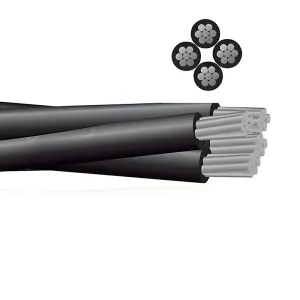
ABC Aerial Bundled Cable 0.6/1kv - 4X50mm² & 4X70mm² , AAAC Conductor, XLPE Insulated
Phân loại của họ: Dây điện cách nhiệt trên caoLượt xem: 253Số:Thời gian phát hành: 2025-09-02 07:18:11The ABC Aerial Bundled Cable 0.6/1kV - 4×50mm² & 4×70mm² with AAAC conductor and XLPE insulation is a high-performance equipment specially designed for large-capacity power transmission in the medium and low-voltage power distribution field. Relying on the core advantages of "large cross-section with high current-carrying capacity, high-toughness conductor, and full insulation protection", it is widely used in urban distribution network trunk lines, large industrial park main power distribution, high-density residential community centralized power supply, and regional power grid interconnection. It has become the preferred solution to replace traditional multiple single-core large-cross-section cables and bare wires. Its design closely meets the needs of medium and low-voltage systems for "high load, low loss, and weather stability", and achieves precise breakthroughs in conductor material upgrading, insulation performance optimization, and large-cross-section structural integration. It can not only adapt to the large-capacity transmission needs of voltage levels below 1kV (single-circuit current-carrying capacity up to more than 200A) but also resist interference from complex outdoor environments, providing key support for the safe and efficient operation of power distribution networks. In terms of conductor and cross-section configuration, the core competitiveness of this cable lies in the AAAC conductor and the "4-core full large cross-section" design. The conductor adopts aluminum alloy core aluminum stranded wire (AAAC), whose material is a precise ratio of high-purity aluminum (content ≥99.7%) and magnesium and silicon alloy elements, processed by special forming and stranding processes. Compared with traditional pure aluminum conductors, the tensile strength of AAAC conductors is increased to 240-280MPa (pure aluminum conductors are about 110MPa), which can withstand greater aerial tension. The pole spacing can be extended to 120-160 meters, reducing the number of poles by 30% compared with traditional lines. At the same time, its conductivity is maintained above 61% IACS, and the 20℃ DC resistance under different cross-sections is strictly controlled: 50mm² cross-section ≤0.38Ω/km, 70mm² cross-section ≤0.27Ω/km, meeting the low-loss transmission requirements of the 0.6/1kV voltage level (line loss rate can be controlled within 2.5%). The 4×50mm² and 4×70mm² full large-cross-section configurations both adopt a 4-core structure of "3 phase lines + 1 neutral line", where the neutral line has the same cross-section as the phase line, breaking the traditional "small cross-section neutral line" design limitation. It can balance the three-phase current more efficiently, stabilize the voltage, and avoid line heating or faults caused by neutral line overload, especially suitable for scenarios with concentrated high-power equipment and easy three-phase load imbalance (such as large factories and high-density communities). The XLPE insulation layer is a key barrier to ensure the safe operation of the cable. Each conductor is covered with cross-linked polyethylene (XLPE) as the insulation material, and the insulation thickness is precisely controlled according to the cross-section difference: 1.8-2.0mm for 50mm² cross-section and 2.0-2.2mm for 70mm² cross-section, which not only meets the insulation strength requirements of the 0.6/1kV voltage level (power frequency withstand voltage ≥12kV/1min without breakdown, impulse withstand voltage ≥60kV) but also has excellent comprehensive performance. After cross-linking treatment, the molecular structure of XLPE is three-dimensional network-like, with a long-term allowable operating temperature of 90℃ and a maximum short-circuit withstand temperature of 250℃ (1 second for a short time), which can adapt to the sudden temperature changes caused by load fluctuations in the power distribution system (such as starting and stopping large equipment in factories) and avoid thermal aging and cracking of the insulation. Its dielectric loss tangent value is ≤0.0005 (20℃, 50Hz), and the volume resistivity is ≥1×10¹⁴Ω·cm, with stable insulation performance. It can effectively suppress partial discharge and reduce the risk of leakage and short-circuit caused by insulation breakdown. In addition, XLPE insulation also has excellent weather resistance and corrosion resistance. After 1500 hours of UV irradiation test, the tensile strength retention rate is ≥85% without discoloration or cracking; after 72 hours of immersion in 5% sulfuric acid or 5% sodium hydroxide solution, the insulation performance does not decrease significantly. It can resist harsh environments such as outdoor exposure, rain, snow, freezing, and industrial acid-base haze for a long time, significantly extending the service life of the cable to more than 35 years. In terms of structure and performance adaptability, the bundled design and mechanical performance advantages of this cable are remarkable. The 4 large-cross-section conductors are integrated into one by parallel bundling, and an HDPE sheath (thickness 2.0-2.5mm) can be added to the outer layer as needed. The overall structure is compact (the outer diameter of 50mm² unsheathed cable is about 32-34mm, and 70mm² is about 36-38mm), and the weight per unit length is reasonably controlled (about 2.8kg/m for 50mm² and 3.6kg/m for 70mm²), which is more than 65% lighter than copper-core cables of the same cross-section. It greatly reduces the load on the poles and simplifies the laying process - erection can be completed with small and medium-sized wire-releasing machinery, and the installation efficiency is 45% higher than that of traditional multiple large-cross-section cables. It is especially suitable for scenarios that require long-distance spans such as urban main roads and wide factory areas in industrial parks. In terms of mechanical performance, the AAAC conductor has excellent fatigue resistance. After 10,000 bending cycle tests, the conductor breaking strength retention rate is ≥90%, which can resist dynamic tension caused by wind load and temperature changes. At the same time, the minimum bending radius of the cable is 15 times the outer diameter (about 480mm for 50mm² cable and 570mm for 70mm² cable), and no excessive stretching is required during laying, avoiding damage to the insulation and conductor, and further ensuring construction safety and operation stability. In practical application scenarios, the value of this cable is fully reflected. In the transformation of urban distribution network trunk lines, the 4×70mm² specification can replace traditional multiple 50mm² cables, with a single-circuit current-carrying capacity of more than 220A, which can meet the power transmission needs of a 1-2 square kilometer area, reduce the number of line laying, lower the space occupied by poles, and help the urban distribution network upgrade to "compact and efficient". In the main power distribution of large industrial parks, the 4×50mm² specification can carry the three-phase power needs of small and medium-sized factories (such as auto parts factories and electronic equipment factories), and the 70mm² specification is suitable for the high-power needs of large heavy industrial equipment (such as machine tools and compressors). The 1kV voltage level perfectly matches the internal power distribution network of the park, avoiding abnormal equipment operation caused by voltage loss. In the centralized power supply of high-density residential communities (with more than 1,000 households), the 4×50mm² specification can cover the overall electricity consumption of a single community, and the 4×70mm² specification is suitable for extra-large communities or comprehensive communities with commercial supporting facilities (such as shopping malls and supermarkets). The design of the neutral line with the same cross-section as the phase line can effectively balance the mixed load of residential electricity and commercial electricity, avoiding voltage deviation affecting electricity quality. In regional power grid interconnection, the high strength of the AAAC conductor and the weather resistance of the XLPE insulation can adapt to strong winds and temperature changes in open suburban areas, ensuring stable power supply interconnection between different regional power grids. In terms of economic and environmental value, this cable also has significant advantages. In terms of material cost, AAAC conductors are more than 50% cheaper than copper conductors, XLPE insulation materials have high cost performance, and the bundled structure reduces the consumption of auxiliary materials. The overall procurement cost is 45-50% lower than that of copper-core cables with the same current-carrying capacity. In terms of operation and maintenance cost, its designed service life of 35 years and excellent anti-fault ability reduce the frequency of line replacement and maintenance. The full-life cycle operation and maintenance cost is only 1/2 of that of traditional cables. In terms of environmental protection, AAAC conductors can be 100% recycled, and XLPE insulation materials can achieve resource recycling after harmless treatment, which conforms to the concept of "green power distribution". In addition, the bundled structure reduces the space occupied by lines and reduces damage to the ecological environment along the line, which is especially suitable for power grid construction around ecological protection areas or urban landscape areas. In conclusion, through conductor material upgrading, large-cross-section configuration innovation and insulation performance optimization, the ABC Aerial Bundled Cable 0.6/1kV - 4×50mm² & 4×70mm² with AAAC conductor and XLPE insulation has achieved multiple values of "high current-carrying capacity, strong tolerance, economy and environmental protection". It not only solves the pain points of traditional medium and low-voltage large-capacity power distribution lines such as "high loss, large land occupation and difficult operation and maintenance" but also can adapt to the power supply needs of diverse large-capacity distribution scenarios such as cities, industry and residences. It provides key equipment support for the upgrading and transformation and high-quality development of medium and low-voltage power distribution networks and is one of the important products. -
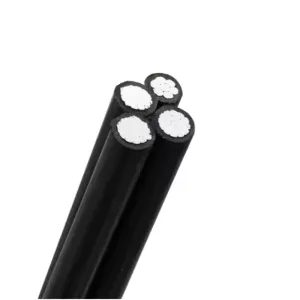
Low Voltage Aerial Bundled Cable (ABC) , 4-Core, AAAC Conductor, XLPE Insulated, Black UV-Resistant LLDPE Sheathed, 0.6/1kv, 4X70mm²
Phân loại của họ: Dây điện cách nhiệt trên caoLượt xem: 313Số:Thời gian phát hành: 2025-09-02 09:21:46Low Voltage Aerial Bundled Cable (ABC) is a specialized power transmission solution widely utilized in low-voltage distribution networks, and the variant defined by the specifications—4-Core, AAAC Conductor, XLPE Insulated, Black UV-Resistant LLDPE Sheathed, 0.6/1kV, 4X70mm²—stands out for its tailored design to meet the demands of reliable, long-lasting, and safe electricity supply in both urban and rural settings. This cable integrates high-performance materials and structural optimizations, making it a preferred choice for utilities, industrial facilities, and residential areas where aerial installation (e.g., along utility poles) is required, and resistance to environmental stress, mechanical impact, and electrical faults is critical. Core Design and Conductor: AAAC (All-Aluminum Alloy Conductor) At the heart of this ABC cable is its 4-core configuration with AAAC conductors, each sized at 70mm² (denoted as 4X70mm²). AAAC, or All-Aluminum Alloy Conductor, is selected for its superior combination of mechanical strength, corrosion resistance, and lightweight properties—key advantages over traditional pure aluminum or copper conductors. Unlike pure aluminum, which can suffer from fatigue or creep under long-term tension (a common issue in aerial installations where cables are suspended between poles), AAAC is alloyed with elements like magnesium and silicon. These alloys enhance the conductor’s tensile strength, allowing it to withstand the mechanical stress of aerial deployment (e.g., wind loads, self-weight) without premature sagging or breakage. Additionally, AAAC exhibits excellent corrosion resistance, making it suitable for harsh environments such as coastal areas (where saltwater spray accelerates corrosion) or industrial zones (with high levels of pollutants). The 70mm² cross-sectional area per core is a deliberate choice to balance current-carrying capacity and installation efficiency. A 70mm² conductor can safely transmit high levels of low-voltage current (compatible with the 0.6/1kV rating) while minimizing electrical resistance—this reduces energy loss during transmission, a critical factor for utilities aiming to improve grid efficiency and lower operational costs. The 4-core design further enhances functionality: it typically includes three phase conductors (for three-phase power distribution, the standard in most industrial and residential grids) and one neutral conductor, eliminating the need for separate neutral wires and simplifying installation. This bundled structure also reduces the risk of phase-to-phase faults, as the cores are insulated and sheathed together, preventing accidental contact between live conductors. Insulation: XLPE (Cross-Linked Polyethylene) Each conductor in the cable is insulated with XLPE (Cross-Linked Polyethylene), a material renowned for its exceptional electrical, thermal, and chemical performance in low-voltage applications. XLPE is created by cross-linking polyethylene molecules through chemical or radiation processes, which transforms the material from a thermoplastic (meltable under heat) to a thermoset (heat-resistant and dimensionally stable). This cross-linking gives XLPE several advantages over traditional insulation materials like PVC (polyvinyl chloride): First, XLPE has a high dielectric strength, meaning it can withstand the 0.6/1kV voltage rating of the cable without electrical breakdown. The 0.6/1kV rating indicates that the cable is designed for a maximum phase-to-earth voltage of 0.6kV and a phase-to-phase voltage of 1kV—standard for low-voltage distribution networks that supply power to homes, small businesses, and light industrial facilities. XLPE’s dielectric properties also minimize leakage current, further reducing energy loss and enhancing the cable’s safety. Second, XLPE offers excellent thermal resistance. It can operate at higher temperatures (typically up to 90°C for continuous use, with short-term overload capabilities up to 130°C) compared to PVC, which degrades at around 70°C. This thermal stability allows the cable to handle temporary current surges (e.g., during peak electricity demand in summer or winter) without insulation damage, extending its service life. Additionally, XLPE is resistant to moisture, oils, and most chemicals, ensuring it remains effective even in humid or polluted environments—such as agricultural areas where fertilizers or pesticides might come into contact with the cable, or urban areas with exposure to rain and dust. Sheathing: Black UV-Resistant LLDPE (Linear Low-Density Polyethylene) The entire 4-core assembly is encased in a black UV-resistant LLDPE sheath, a critical component for aerial installations where the cable is exposed to direct sunlight and outdoor elements. LLDPE (Linear Low-Density Polyethylene) is a flexible, durable thermoplastic that provides mechanical protection to the insulated conductors, shielding them from physical damage (e.g., impacts from tree branches, birds, or accidental contact during maintenance) and environmental wear. The “UV-resistant” modification is particularly vital: sunlight contains ultraviolet (UV) radiation that degrades most polymers over time, causing them to become brittle, crack, and lose their protective properties. Without UV resistance, an aerial cable’s sheath would deteriorate within a few years, exposing the insulated conductors to moisture, dust, and damage—leading to electrical faults, power outages, or safety hazards (e.g., electric shocks). The black color of the sheath further enhances UV protection by absorbing UV rays rather than reflecting them, reducing the amount of radiation that penetrates the material. Beyond UV resistance, LLDPE sheathing offers excellent flexibility, which simplifies installation. Aerial cables often need to be bent or routed around utility poles, trees, or other obstacles, and LLDPE’s flexibility allows for easy handling without cracking. It is also lightweight, which reduces the overall weight of the cable—an important consideration for aerial installations, as heavier cables require stronger support structures (e.g., thicker utility poles or additional brackets), increasing installation costs. LLDPE is also resistant to water absorption, ensuring that moisture does not seep into the cable even during heavy rain or flooding, which could otherwise cause insulation failure or corrosion of the AAAC conductors. Applications and Performance Advantages This ABC cable variant is ideally suited for a wide range of low-voltage distribution scenarios, thanks to its integrated design and material choices. In rural areas, where power lines often span long distances and are exposed to harsh weather (e.g., strong winds, heavy snow, or intense sunlight), the cable’s AAAC conductors (tension-resistant, corrosion-proof) and UV-resistant LLDPE sheath (weatherproof) ensure reliable performance with minimal maintenance. In urban areas, its compact 4-core design reduces the need for multiple separate cables, saving space on utility poles and reducing visual clutter—an important consideration for cities aiming to improve aesthetic appeal. It is also used in industrial facilities, such as manufacturing plants or warehouses, where low-voltage power is required for machinery and equipment, and the cable’s XLPE insulation and LLDPE sheathing can withstand the industrial environment’s dust, vibration, and occasional chemical exposure. Overall, this Low Voltage ABC Cable (4-Core, AAAC, XLPE Insulated, UV-Resistant LLDPE Sheathed, 0.6/1kV, 4X70mm²) delivers a balance of safety, efficiency, and durability. Its components are carefully selected to address the unique challenges of aerial low-voltage distribution—from mechanical stress and UV radiation to electrical overloads and environmental corrosion—making it a reliable solution for modern power grids. By minimizing energy loss, reducing maintenance needs, and ensuring long-term performance, this cable helps utilities and end-users maintain a stable, safe, and cost-effective electricity supply.
Tin tức
Danh mục:
Không có kết quả tìm kiếm!
Trường hợp
Danh mục:
Không có kết quả tìm kiếm!
Video
Danh mục:
Không có kết quả tìm kiếm!
Tải về
Danh mục:
Không có kết quả tìm kiếm!
Tuyển dụng
Danh mục:
Không có kết quả tìm kiếm!
Sản phẩm được đề xuất
Không có kết quả tìm kiếm!



 Điện thoại
 Thư
Thư